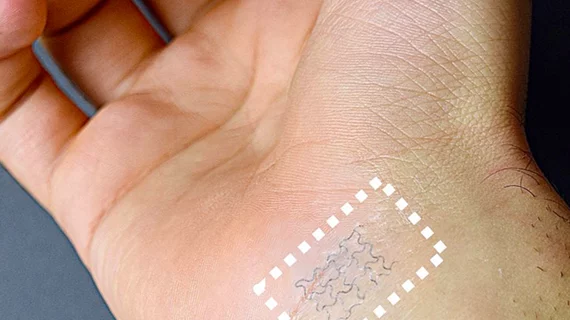
A team at Purdue University in West Lafayette, Indiana, announced progress on its latest cardiology wearable: a plant-based, stretchable wrist sticker that has the ability to monitor physical activity and alert users to health risks in real-time.
As Canada is set to legalize marijuana use on Oct. 17, Walmart—the world’s largest employer—is seriously considering adding cannabis products alongside other medications in its aisles in the country, according to Hemp Industry Daily.
Decision support (DS) systems based on artificial intelligence (AI) can improve the diagnostic performance of radiologists, but what’s the best way to integrate those DS systems into a reader’s workflow? Researchers tested two different reading methodologies, sharing their findings in the Journal of Digital Imaging.
Anthem, Inc. will pay a record $16 million to HHS Office for Civil Rights (OCR) after a data breach exposed the electronic protected health information of nearly 79 million people.
Anthem, Inc. will pay a record $16 million to the Department of Health and Human Services (HHS) Office for Civil Rights (OCR) after a data breach exposed the electronic protected health information of nearly 79 million people.
Children who eat breakfasts high in energy but low in nutrition are likely to see higher cholesterol levels, increased insulin resistance and an elevated risk for cardiovascular complications in the future, according to research out of Spain.
Many women—including insured women with full-time jobs—face significant out-of-pocket costs after being diagnosed with breast cancer. It leads to many hard-to-answer questions: What should they do? Who can they turn to for help?
Apple has teamed up with Zimmer Bioment to track patients who have undergone hip and knee replacement surgeries—two of the most common surgeries in the nation.
The Massachusetts Institute of Technology (MIT) announced a $1 billion commitment to “address the global opportunities and challenges presented by the prevalence of computing and the rise of artificial intelligence (AI).”
A team of East Coast researchers found the effectiveness of artificial intelligence (AI)-based decision support (DS) systems depends on how they are presented in a radiologist’s clinical workflow.