The utilization of artificial intelligence (AI) in healthcare was named the second most important medical innovation for 2019 by the Cleveland Clinic, marking a big rise in the emerging technology.
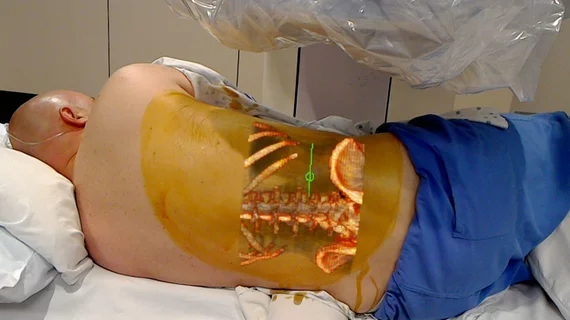
The technology projects 2D, 3D and 4D images of patients interactively by overlaying them onto the patient's body, according to a Novarad press release published Oct. 24.
Cardiac MRI can accurately diagnose pulmonary hypertension (PH) without the invasiveness of right-sided heart catheterization (RHC), suggests a new study published in Radiology.
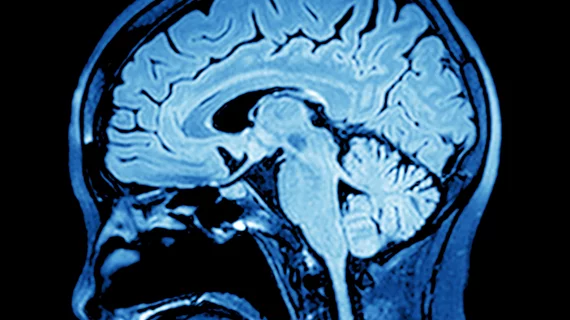
With the help of MRI, San Diego State University researchers found the amygdala of children on the autism spectrum disorder (ASD) had weaker connections with some regions of the brain compared to “typically developing” children within the same age group.
Kinetic imaging in x-ray angiography outperforms digital subtraction angiography at providing better image quality and reducing radiation exposure for improved viewing of small blood vessels, according to research published online Oct. 16 in Radiology.
The Radiological Society of North America (RSNA) Research & Education Foundation awarded the $75,000 2018 Carestream Health/RSNA Research Scholar Grant to Christine E. Edmonds, MD, of Massachusetts General Hospital in Boston.
A simple score containing four MRI markers of cerebral small vessel disease (CSVD) is associated with stroke, dementia and mortality among older adults, according to an analysis of the population-based Rotterdam Study published Oct. 24 in Stroke.
The work of chemists from the National University of Singapore (NUS) could someday lead to safer, more affordable x-rays, according to new research published in Nature.