People who are frail and older than 65 are at a 50 percent increased risk of major bleeding during hospitalizations for heart attack compared to nonfrail patients, according to research published Nov. 19 in JACC: Cardiovascular Interventions.
More than half of personal healthcare information (PHI) data breaches in recent history can be traced back to healthcare providers themselves rather than hackers or external parties, researchers reported in JAMA Internal Medicine.
A machine learning algorithm based on perfusion-weighted MRI accurately differentiated between benign and malignant tumors in the uterus, according to researchers at Tehran University of Medical Sciences (TUMS) in Iran.
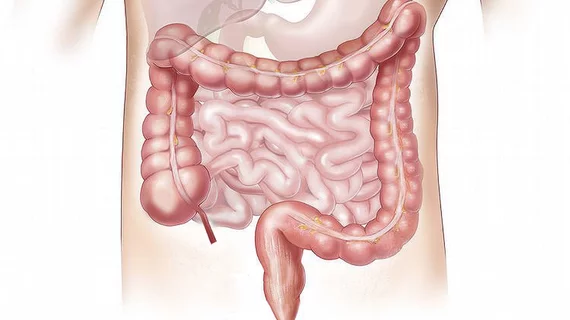
MRI may be a better choice than multidetector CT for identifying high-risk colon cancers that have already reached stage II or stage III, are still surgically resectable and are at risk of progressing to stage IV.
Just 45 minutes of chatting with a second-year medical student could improve disease management among patients with chronic conditions like hypertension, diabetes and chronic obstructive pulmonary disease (COPD), according to research published in the November issue of the Journal of the American Osteopathic Association.
The American Cancer Society (ACS) released a new report highlighting the current state of cancer screening and put forth specific areas requiring further attention to fully maximize the potential of screening to combat cancer.
The use of intravascular ultrasound (IVUS) to guide PCI leads to further improvements in event-free survival between one and two years post-procedure, according to a report from the ADAPT-DES study published in Circulation: Cardiovascular Interventions.
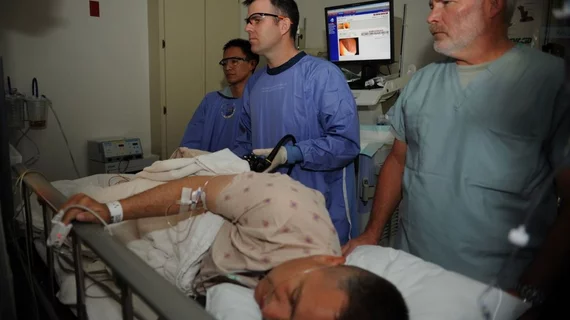
In an interview with AI in Healthcare, JingJia Liu, chief executive officer at Wision AI, discussed the company's new machine-learning algorithm for polyp detection, what’s next and the impact of AI products in the medical industry.