The United Kingdom’s National Health Service (NHS) has earmarked £20.5 billion (approximately $26 billion) for its Long-Term Plan to prevent and detect diseases earlier. The ambitious 10-year plan is welcomed by The Royal College of Radiologists (RCR) and could save as many as 500,000 lives.
Healthcare is home to many of the most desirable jobs in the United States, according to a new report published by U.S. News & World Report. So which jobs made the list?
Bruce J. Tromberg, PhD. Courtesy of the National Institute of Biomedical Imaging and Bioengineering (NIBIB).
Bruce J. Tromberg, PhD, was appointed director of the National Institute of Biomedical Imaging and Bioengineering (NIBIB) on Jan. 7 at the National Institutes of Health in Bethesda, Maryland, according to a recent NIBIB news release.
Treating pediatric Hodgkin lymphoma (HL) patients with chemotherapy followed by radiotherapy results in a better five-year survival rate than chemotherapy alone, according to new findings published in JAMA Oncology.
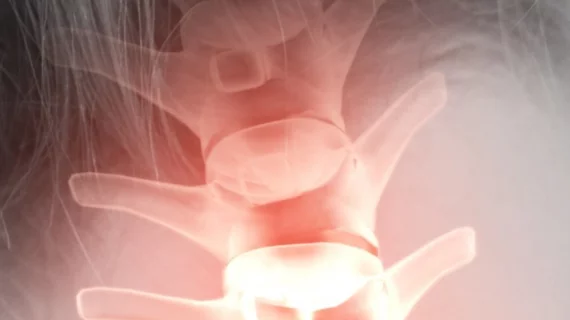
MRI of the spinal cord may be an effective way to inform early treatment of spinal muscular atrophy (SMA) and monitor the disease, according to a case report published in the January-February issue of Clinical Imaging.
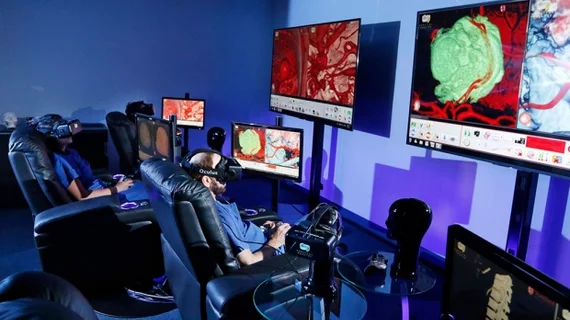
Courtesy of Stanford University School of Medicine.
At Stanford University Medical School in California, virtual reality is helping to make surgical training and planning more efficient and patient-centered all while reframing education for medical students, according to an article published online Jan. 9 by Fortune.
AI applied to an electrocardiogram (EKG) test reliably detected asymptomatic left ventricular dysfunction (ALVD)—a precursor to heart failure—and predicted which patients were most at risk of developing the condition in the future, according to a Mayo Clinic study published in Nature Medicine.