How significant is the hype surrounding artificial intelligence and machine learning in radiology? According to new market research from Reaction Data, 77 percent of imaging professionals said they think machine learning is important when asked about it in 2018, up from 65 percent in 2017.
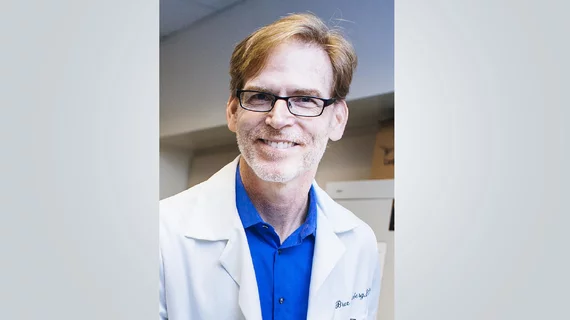
The National Institutes of Health (NIGH) has administered the oath of office to Bruce J. Tromberg, PhD, the new director of the National Institute of Biomedical Imaging and Bioengineering (NIBIB).
Drug prices are going up not just because of new innovations in medications, as the pharma industry frequently cites, but also because the industry is pricing existing products higher, according to a Health Affairs study.
The Society of Cardiovascular Computed Tomography (SCCT) has issued an updated guidance for the use of CT in transcatheter aortic valve implantation (TAVI) and transcatheter aortic valve replacement (TAVR) procedures. The full document can be read in the Journal of Cardiovascular Computed Tomography.
The Society of Cardiovascular Computed Tomography (SCCT) released updated guidelines for using CT imaging in patients undergoing transcatheter aortic valve replacement (TAVR).
The United Kingdom’s National Health Service (NHS) has earmarked £20.5 billion (approximately $26 billion) for its Long-Term Plan to prevent and detect diseases earlier. The ambitious 10-year plan is welcomed by The Royal College of Radiologists (RCR) and could save as many as 500,000 lives.
Healthcare is home to many of the most desirable jobs in the United States, according to a new report published by U.S. News & World Report. So which jobs made the list?
Bruce J. Tromberg, PhD. Courtesy of the National Institute of Biomedical Imaging and Bioengineering (NIBIB).
Bruce J. Tromberg, PhD, was appointed director of the National Institute of Biomedical Imaging and Bioengineering (NIBIB) on Jan. 7 at the National Institutes of Health in Bethesda, Maryland, according to a recent NIBIB news release.
Treating pediatric Hodgkin lymphoma (HL) patients with chemotherapy followed by radiotherapy results in a better five-year survival rate than chemotherapy alone, according to new findings published in JAMA Oncology.