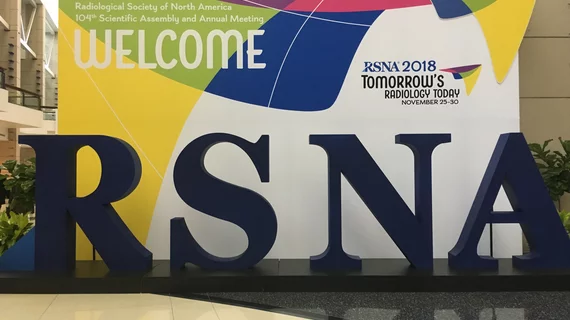
The Radiological Society of North America (RSNA) estimates that RSNA 2018’s economic impact on the city of Chicago was $160 million. This is up from the society’s estimate that RSNA 2017 made an economic impact of $130 million on the Windy City.
About 1 in 5 patients experienced cachexia—or a loss of muscle and body weight—within a year of acute ischemic stroke, according to a small, single-center study published Jan. 24 in the Journal of Cachexia, Sarcopenia and Muscle.
In order for AI technology to be safely incorporated into diagnostic and clinical decision support (CDS) software, stakeholders must first address its effectiveness and provide additional evidence for its usefulness in the clinical setting, according to Duke researchers.
Although the 2013 American College of Cardiology and American Heart Association cholesterol guidelines expanded indications for statin use in heart patients, few primary care providers (PCPs) are prescribing more of the medication, researchers reported Jan. 25 in the Journal of the American Heart Association.
Though AI continues to make great strides within radiology, some radiologists are still unprepared to educate medical students regarding its usage. This in turn may hinder medical students and trainees from pursuing radiology, according to a new editorial published in Academic Radiology.
New research involving breast cancer patients in the U.S. Military Health System found that black women wait longer to undergo breast cancer surgery after being diagnosed with the disease than white women, according to a study published Jan. 23 in JAMA Surgery.
Though artificial intelligence continues to make great strides within radiology, some radiologists are still unprepared to educate medical students regarding its usage, according to a new commentary published in Academic Radiology.
A team of national researchers has identified a set of multiparametric MRI-based guidelines and clinical features which can help clinicians easier determine a patient’s risk that their prostate cancer will spread, according to a Jan. 22 study published in Radiology.
Hospitals are now conducting wealth screenings with software that culls public data to see which patients are most likely to donate to the healthcare organization, The New York Times reported. The practice is increasingly common across hospitals, particularly large systems.
An analysis of more than 5,000 heavy smokers who underwent CT scans revealed that male smokers experienced a greater burden of coronary artery calcium (CAC) while women tended to have higher volumes of thoracic aorta calcium (TAC). Both measures were associated with increased cardiovascular and all-cause mortality, researchers reported in JACC: Cardiovascular Imaging.