Machine learning models could be used to help improve the prediction ability of emergency room (ER) triage methods, after a JAMA study showed the technology was better at making clinical predictions than traditional approaches.
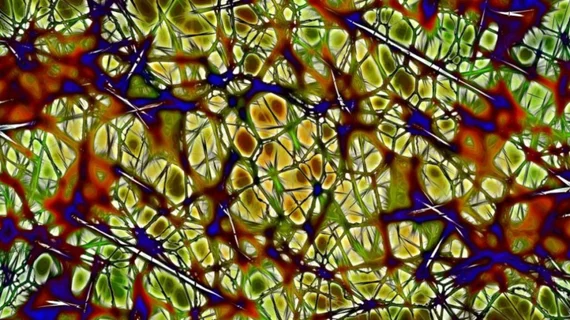
Researchers used in vivo, two-photon imaging to identify a blood-clotting protein responsible for destroying the synapses in the brain—a precursor to cognitive decline, according to a Feb. 5 study published in Neuron.
The Montreal Neurological Institute and Hospital—also known as The Neuro—of McGill University in Montreal, Québec, Canada, has installed the country’s first whole-body 7-Tesla MRI scanner.
Families with subsidized health insurance through the Affordable Care Act (ACA) may experience indirect financial benefits that go beyond health costs—to housing, according to new research published in the Journal of Public Economics.
Prior authorization that requires physicians to get approval from health insurers for certain drugs, tests and treatments isn’t good for patients, according to a survey of 1,000 practicing physicians from the American Medical Association (AMA).
The growth in hospital prices is driving up healthcare costs for private insurance more than the rise in physician prices, according to a recent study in Health Affairs.
An MRI-guided strategy for treating patients with rheumatoid arthritis (RA) showed no benefits over conventional treat-to-target approaches, according to a Feb. 5 study published in JAMA. The authors also found the modality showed no benefit in radiographic progression.
Researchers have demonstrated the use of natural language processing (NLP) to identify urinary-tract stones in positive radiology reports on CT scans of the kidneys, ureter and bladder.
Academic pediatric facilities expose pediatric patients to lower CT radiation doses than nonacademic pediatric facilities and all adult facilities, according to a new study published in Radiology.