“Quantifying facility-level variation in cardiac stress test utilization is important for healthcare systems seeking to improve the efficiency and quality of cardiovascular care,” wrote authors of a recent study published in JACC: Cardiovascular Imaging.
The FDA’s Circulatory System Devices Panel of the Medical Devices Advisory Committee will meet in mid-June to discuss recent controversies and safety practices surrounding paclitaxel-coated and -eluting medical devices, according to a notice posted April 22.
The Vesical Imaging-Reporting and Data System (VI-RADS) was introduced in 2018 to provide consistency when radiologists use multiparametric MRI (mpMRI) for staging bladder cancer.
The x-ray technology can depict movement and allows radiologists to annotate images for a more detailed clinical finding, according to the company. DDR also enables clinicians to observe the dynamic interaction of anatomical structures such as tissue and bone over time.
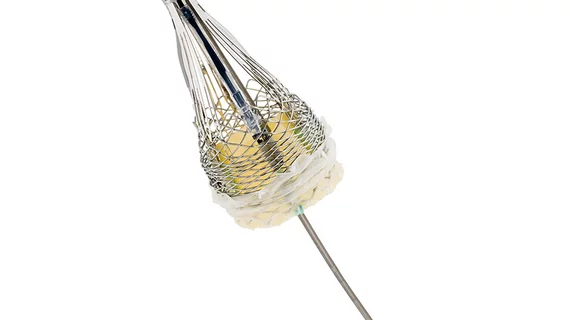
Boston Scientific’s LOTUS Edge Aortic Valve System was cleared by the FDA April 23 for use in high-risk surgical candidates with severe aortic stenosis.
Using deep learning to tease out factors indicative of age-related variability in the way toddlers gaze at visual stimuli, researchers at the University of Minnesota have shown that the technology can accurately distinguish 18-month-olds from 30-month-olds.
The American Society of Radiologic Technologists (ASRT) announced that the Nevada Society of Radiologic Technologists and Diane Hutton, BA, RT(R), have been awarded the 2019 ASRT Award for Advocacy.
The CDC’s most recent Health, United States report, released this April, reveals the extent to which racial and ethnic disparities in the U.S. affect cardiovascular care and rates of heart disease in the country.
Artificial intelligence-based computer-aided detection (AI-CAD) software can help radiologists detect more cancers when interpreting mammograms, according to a new study published in the Journal of Digital Imaging.
"Our findings suggest that patients with higher prechemotherapy DHEAS levels had lower odds of developing self-perceived cognitive impairment,” wrote authors of a study published in Pharmacotherapy: The Journal of Human Pharmacology and Drug Therapy.