A Harvard undergrad has created a computer program that can improve the treatment of tuberculosis, an infectious disease with unique challenges thanks to its shapeshifting ability to resist drugs.
“The results of this study demonstrate proof of the concept that DL models may aid in the prediction of thrombolysis outcomes,” wrote authors of an April 30 study published in Academic Radiology.
Research out of the University of Manchester suggests Tadalafil (Cialis)—an erectile dysfunction drug that falls in the same class as Viagra—could slow and possibly reverse the progression of heart failure (HF).
Citing “recent incidents” that exposed patients to unnecessary radiation, the FDA has issued a reminder to imaging providers about the proper operation of rubidium-82 (Rb-82) generators used during PET imaging examinations.
The addition of 2.4% hydrogen to hypoxia patients’ traditional ventilation gases improved neurologic outcomes and reduced tissue injury in a recent study of piglets, suggesting hydrogen might be a beneficial addition to therapy for babies undergoing surgery for congenital heart disease (CHD).
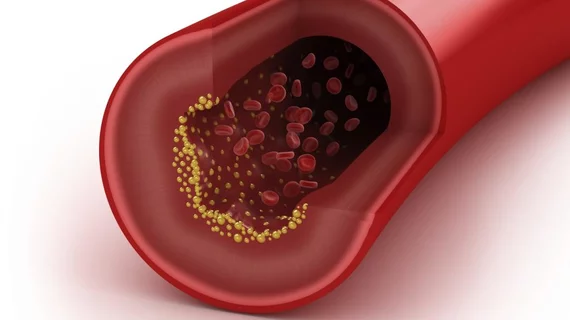
“With imaging, we’ll be able to identify vulnerable plaque, deliver treatment directly to it, and see whether the treatment is effective," said award recipient Yongjian Liu, PhD, with Washington University in St. Louis.
Blockchain technology is already expected to have a major impact in the healthcare space, and the wearables sector could do with an injection of the technology, as well, writes Lucas Mearian for ComputerWorld.
Heart disease might be the leading cause of death in the United States, but, according to a recent report, it’s also one of the least searched-for diseases on the internet.
Peptide receptor radionuclide therapy (PRRT) is an effective long-term treatment option for patients with malignant neuroendocrine tumors, according to a 12-year clinical study published in the Journal of Nuclear Medicine.
A machine-learning algorithm has surpassed four commonly used methods for catching sepsis early in hospital patients, giving clinicians up to 48 hours to intervene before the condition has a chance to begin turning dangerous.