Home

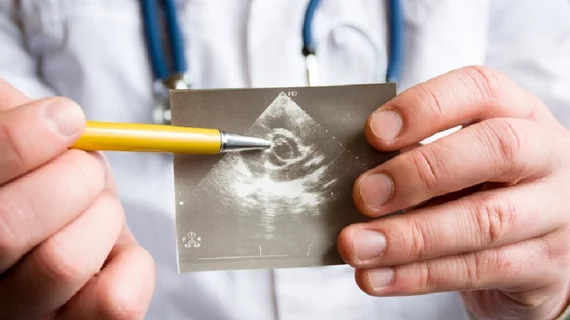
Pocket-sized: Pointers for Using (& Not Using) Handheld Point-of-Care Echocardiography

ps_ci.jpg

Handheld POC echo has proven useful in- and outside of the emergency department, but physicians still have reservations.

  • Read more about Pocket-sized: Pointers for Using (& Not Using) Handheld Point-of-Care Echocardiography

Imaging may not always be necessary for women experiencing breast pain

Women regularly undergo imaging examinations because they are experiencing breast pain. If there are no other symptoms, however, imaging may not be necessary, according to new findings published in the Journal of Breast Imaging.

  • Read more about Imaging may not always be necessary for women experiencing breast pain

Algorithmic Potential: Leveraging Deep Learning to Improve Arrhythmia Identification & Classification

ap_ci.jpg

Artificial intelligence is emerging as a hot tool for diagnosing rhythm disorders.

  • Read more about Algorithmic Potential: Leveraging Deep Learning to Improve Arrhythmia Identification & Classification

MRI scans show a stronger body means a stronger brain

German researchers have found that physical fitness can actually improve brain structure and brain functioning in young people, according to a study presented at the European College of Neuropsychopharmacology (ECNP) Congress in Copenhagen.

  • Read more about MRI scans show a stronger body means a stronger brain

Moving specialty drug administration from hospitals to homes could save $4B per year

Money

Administering specialty drugs in physicians’ offices and patients’ homes instead of in-hospital could improve care and cut healthcare spending in the U.S. by $4 billion each year, according to a Sept. 9 report from UnitedHealth Group.

  • Read more about Moving specialty drug administration from hospitals to homes could save $4B per year

Patients leery of medical AI

Robot Doctor

Healthcare consumers see AI-delivered healthcare as standardized and therefore neglectful of patients’ individual needs, which is one reason they tend to be less accepting of healthcare delivered by AI than that provided by humans.

  • Read more about Patients leery of medical AI

‘We’re moving in the wrong direction’: Why younger people are having more heart attacks

Despite a decades-long decline in the rate of heart attacks among older people in the U.S., younger men in their twenties and thirties are presenting more often with MI, Men’s Health reports.

  • Read more about ‘We’re moving in the wrong direction’: Why younger people are having more heart attacks

Tackling the Undertreatment of Aortic Stenosis in the U.S.

as_ci.jpg

The problem is fixable, but it will take hard work, says one Duke University researcher. And cardiologists could be the key. 

  • Read more about Tackling the Undertreatment of Aortic Stenosis in the U.S.

Google looking to patent AI-based baby monitoring

Nursery

Advancing its interest in AI for smart homes, Google has filed a patent for AI technology that would monitor babies by tracking their vocalizations as well as their eye and body movements.


  • Read more about Google looking to patent AI-based baby monitoring

Transcarotid Access: The Future of Non-femoral TAVR?

ta_ci.jpg

The transcarotid approach to TAVR is becoming more common, according to research presented at TVT.19.

  • Read more about Transcarotid Access: The Future of Non-femoral TAVR?

Pagination

    • First page « First
    • Previous page ‹ Previous
    • Page …1952
    • Page 1953
    • Page 1954
    • Page 1955
    • Current page 1956
    • Page 1957
    • Page 1958
    • Page 1959
    • Page 1960 …
    • Next page Next ›
    • Last page Last »
Subscribe
  • Home
  • News
  • Article Archive
  • Custom Content
  • Webinars
  • Press Releases
  • Content Studio
  • Advertising
  • Submit Press Release
  • Contact Us
  • Terms of Use
  • Privacy Policy
  • Cardiovascular Business
  • HealthExec
  • Radiology Business
 
© 2026 Innovate Healthcare | All Rights Reserved. | Terms of Use | Privacy Policy
 
Design by Adaptive Theme