There are many known disparities in breast imaging that have been found in previous studies, but insight into diagnostic mammography processes is still lacking.
AMA President Jack Resneck Jr., MD, speaking during his inauguration at the AMA House of Delegates 2022 meeting this week in Chicago.
Jack Resneck Jr., MD, was inaugurated this week as the 177th president of the AMA and pledged to fight injustices against both patients and physicians.
The FDA has issued final guidance for medical imaging manufacturers seeking the agency’s approval of devices with functionality for quantitative imaging.
Against the backdrop of radiologists getting sued for medical negligence after allegedly reading images too hastily, recent years have seen pointed calls for new radiology rules, requirements or regulations.
While a vast majority of heart transplants in the United States are successful, unplanned hospitalizations after the procedures are still incredibly common.
Preoperative MRI use increased substantially from 2003 to 2016—from 2.9% to 28.2% to be exact—but the modality remained underutilized in certain regions and among specific populations in the United States.
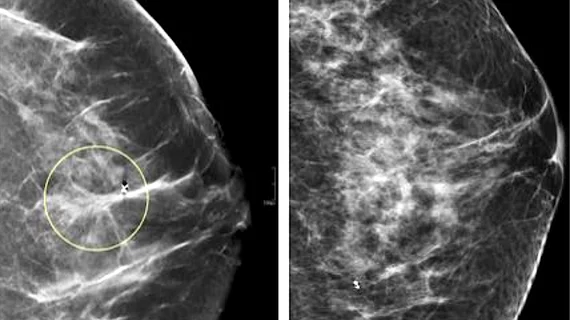
A comparison of standard 2D mammography (right) and digital breast tomosynthesis (DBT), or 3D mammography (left). The DBT creates a data set of 1 mm slices that the radiologist can look through to see more detail in suspect areas and determine if it dense breast tissue is masking a tumor. Image from UCSF.
For the research, special attention was paid to women with dense breasts and other factors that raise their risk of a breast cancer diagnosis.