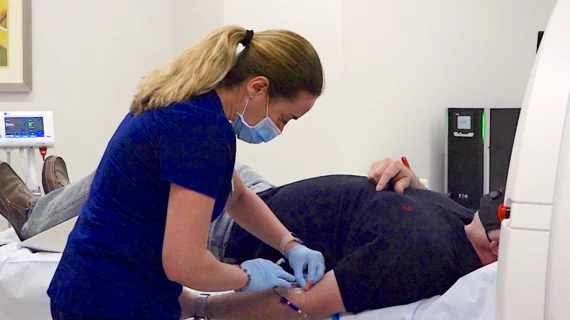
Reviewing a 20-month run with a radiologist-to-technologist communications tool, researchers have found minor problems with image quality 10 times more common than patient callbacks for repeat imaging.
Bracco Diagnostics, Inc has been given the go ahead by the U.S. Food and Drug Administration to temporarily import Iomeron (iomeprol injection) into the U.S. market amid the ongoing iodinated contrast media shortage.
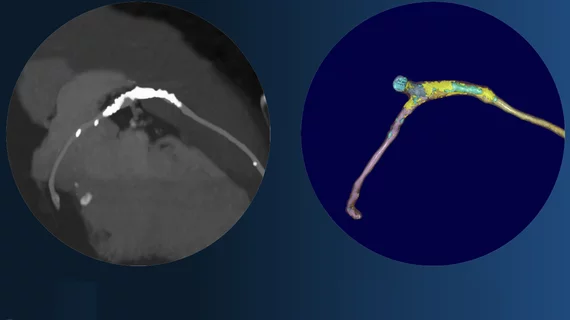
Elucid's AI analysis software in action. The left image shows coronary CT angiography of a vessel showing plaque heavy calcium burden. The right image, processed by Elucid's software, highlights the various types of plaque morphology of these lesions.
New artificial intelligence software that can evaluate coronary CT scans to automatically assess soft plaques were by far the biggest technology advance discussed at the Society of Cardiovascular Computed Tomography (SCCT) 2022 meeting.
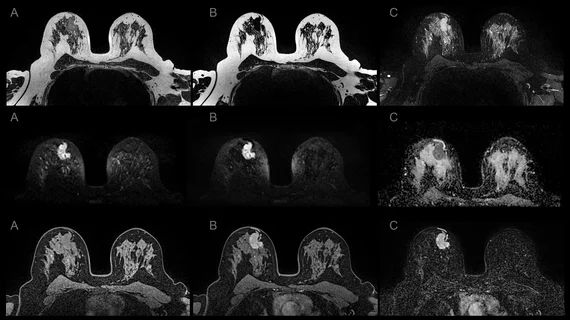
Example of various breast MRI protocol sequences that offer different types of soft tissue enhancement. Breast MRI can help see through dense breast tissue to better detect cancers. Imaging performed on a Siemens Magnetom system.
Experts found that although abbreviated protocols increased the amount of possible scans per hour from 4.7 to 18.8, non-scanning time rose from 50% to 74%.
Healthcare deals stalled during the second quarter of 2022, but the baker’s dozen transactions recorded during the three-month period were offset by a high percentage of mega deals.
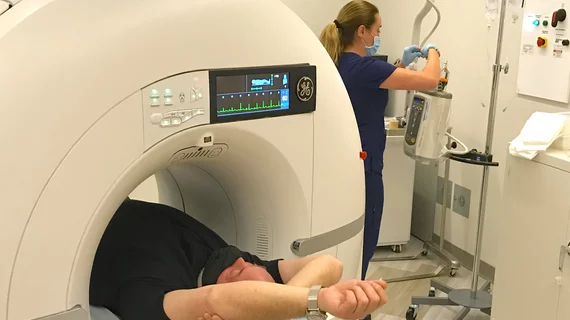
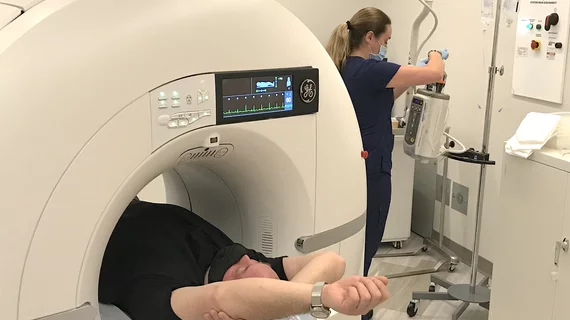
Contrast being loaded into an injector for a cardiac CT scan at Duly Health and Care in Lisle, Illinois. Photo by Dave Fornell
“For patients with a prior ICM-induced hypersensitivity reaction, healthcare providers must balance the benefit of ICM reuse against the risk of a repeat reaction,” authors of a new meta-analysis published in Radiology said.
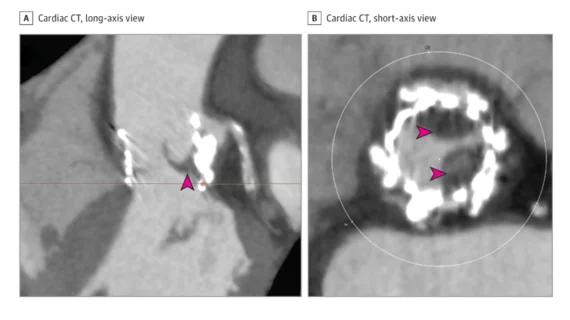
Subclinical leaflet thrombosis after TAVR imaged by CT. The areas of clot attached to the valve leaflets appear dark. Image courtesy of Cahill et al. and JAMA Cardiology.
Treating subclinical leaflet thrombosis after TAVR has been an ongoing challenge for structural heart clinicians, but recent research has gone a long way toward improving our understanding of this important topic.
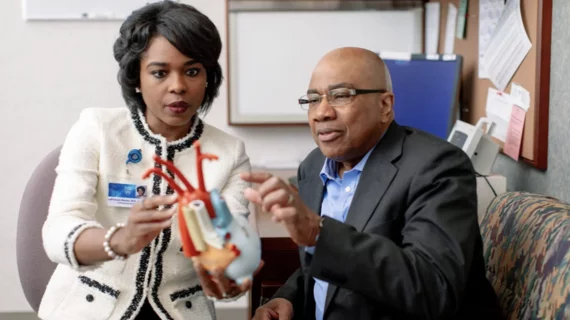
LaPrincess Brewer, MD, a Mayo Clinic preventive cardiologist and principal investigator of the study, explains a heart model. Image is Courtesy of Mayo Clinic, and was taken prior to the COVID-19 pandemic.
Source
Image Courtesy of Mayo Clinic
Copyright
Mayo Clinic
A new trial for participants from 16 church groups in Minnesota showed that app users significantly improved their heart health scores after just 10 weeks.
A Canadian manufacturer of positron emission tomography equipment has received FDA’s OK to market a small-footprint scanner that images targeted organs bearing radiotracers at close range.
A global tech and pharma vendor is set to inject U.S. healthcare with a set of generic contrast agents, the first of which will be an FDA-approved substitute for GE Healthcare’s Visipaque.