An educational outfit has sprung up to equip nonphysicians working in radiology—chiefly administrators, business managers and technologists—with radiologist-level fluency in AI.
Children who begin using tobacco at 9 to 10 years old have significantly smaller brain area and volume than non-users within two years, according to a study published this month.
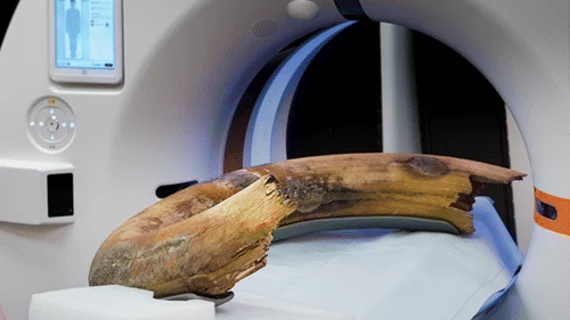
Prior attempts at imaging large fossils such as mammoth tusks failed to capture the full artifact with just one scan, instead requiring multiple partial scans that were subsequently pieced together.
The new report, based on data from the U.S. Bureau of Labor Statistics, once again highlights the fact that cardiology is associated with high demand and high compensation in today's market.
“Although regularly assessing and updating these models is necessary to ensure accurate performance, there is no standard approach to addressing model drift.”
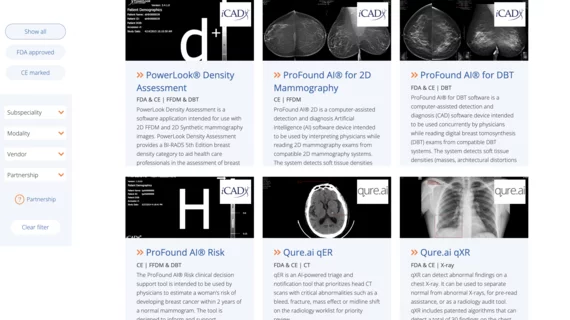
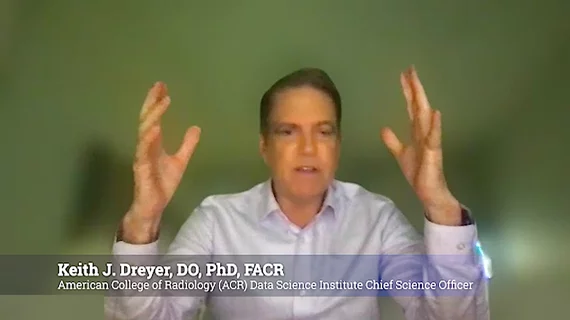
Keith J. Dreyer, DO, PhD, FACR, American College of Radiology (ACR) Data Science Institute Chief Science Officer, explains how radiology vendors have developed AI app stores to make it easier to access new FDA cleared AI algorithms.
Keith J. Dreyer, DO, PhD, FACR, American College of Radiology (ACR) Data Science Institute Chief Science Officer, explains 5 developments to watch for in radiology artificial intelligence (AI).
A new study highlights the benefits of MRI for determining pregnancy risks related to placental dysfunction, opening doors for earlier care management.
Researchers tracked data from more than 12,000 moderate AS patients who originally participated in one of 25 different studies. While the findings seem to suggest earlier treatment could be beneficial for certain high-risk patients, additional research is still required.







![Large peridevice leaks after left atrial appendage occlusion (LAAO) are incredibly rare and not associated with a greater risk of adverse outcomes, according to new research published in JACC: Clinical Electrophysiology.[1] Smaller residual links are more common, however, and associated with a risk of thromboembolic and bleeding events.](/sites/default/files/styles/top_stories/public/2018-08/olderpatient-doctor.jpg.webp?itok=Cv18wcDr)