News

Economics

Legislative changes, demographic shifts and growing demand will combine to drive national health spending to almost $9 trillion by 2034.

Robotic chess

Pitting three multipurpose LLMs against two healthcare-specific AI tools, researchers have discovered the consumer-level AI can beat its purpose-built counterparts in healthcare scenarios—and soundly, at that. 

Thumbnail

Researchers believe the technique also could have utility for brain, head and neck MRI applications and could eventually be adapted to other imaging modalities as well.


Thumbnail

Researchers believe pigeons' perceptual processes could be used to develop artificial intelligence applications in radiology.

Thumbnail

Treating certain high-risk PCI patients with nicorandil before and after treatment can significantly reduce their risk of contrast-related injuries.

robot reviewing heart data

“We have colonoscopies, we have mammograms, but we have not had equivalents for most forms of heart disease,”  Pierre Elias, MD, Pathway Labs founder and CEO, explained.

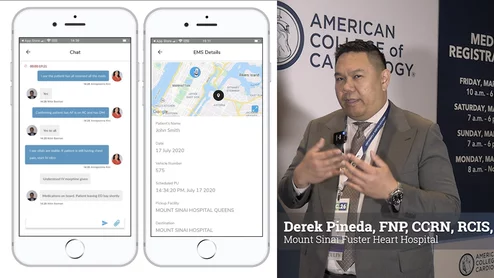
 Derek Pineda, FNP, CCRN, RCIS, FACC, with Mount Sinai Fuster Heart Hospital, explains the use of a digital app platform for STEMI team coordination that helped his health system improve STEMI outcomes.

One of the platform's biggest benefits is the rich clinical information it provides to all members of the care team.

radiology residents training

Harvard University is the No. 1 school in the world for radiology, nuclear medicine and medical imaging, according to the publication. 

Valley Regional Imaging Fayetteville

Fayetteville-based Valley Regional Imaging is unloading its facility to Cape Fear Valley Health, a hospital based in the same Sandhills-region community of southeastern North Carolina. 

Catholic Health

Seton Imaging and its two locations are now part of Trinity Medical WNY, a multispecialty group owned by physicians but controlled by Catholic Health. 

Medicare money bills dollars

Radiologists and other physicians recently wrote to Administrator Mehmet Oz, MD, asking for changes related to contrast-enhanced ultrasound. 

Thumbnail

Experts have suggested the emerging technology could be a “pivotal” tool for the future of breast cancer detection. 

Around the web

Legislative changes, demographic shifts and growing demand will combine to drive national health spending to almost $9 trillion by 2034.

Pitting three multipurpose LLMs against two healthcare-specific AI tools, researchers have discovered the consumer-level AI can beat its purpose-built counterparts in healthcare scenarios—and soundly, at that. 

Researchers believe the technique also could have utility for brain, head and neck MRI applications and could eventually be adapted to other imaging modalities as well.