The agency said it hopes to control “unnecessary” increases in the volume of clinic visit services furnished at certain off-campus hospital departments.
Rabun County, Georgia, jurors settled on the eight-figure sum on June 26 following a trial that started 11 days prior, with Gainesville Radiology Group one of the defendants.
Details are emerging in the extraordinary case of a U.S. toddler who was found alive in a hospital morgue five or six hours after an ER doctor declared the child dead by drowning.
A hospital system in Tennessee is under fire for delays getting patients’ radiology reports submitted in a timely manner following its move to outsource reads.
A patient of Huntsville Hospital Health System says the hospital was negligent when it failed to protect patient data that was taken by hackers during a breach on a legacy Cerner EHR system. The hospital said the EHR vendor is ultimately responsible.
The Office of Inspector General said a "leadership failure and poor decision making" in the Medicaid Fraud Control Unit in New York has left it unable to properly fulfill its mission to "protect patients from abuse and neglect."
Consulting firm Mercer said employers are prepared to deploy cost-cutting measures, including better management of high-cost claims. However, Americans who get insurance through their workplace are likely to face higher out-of-pocket expenses, such as co-pays and deductibles.
The U.S. Department of Health and Human Services is set to release a report this month outlining possible causes of autism spectrum disorder. The Wall Street Journal reports that it names “low folate levels and acetaminophen during pregnancy” as contributing factors.
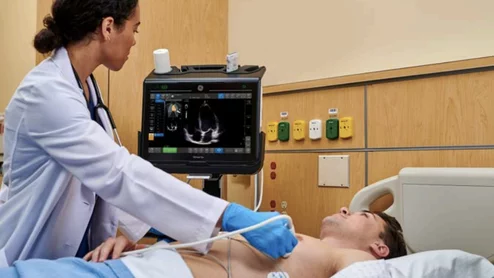
“The explanation here is simple. Ultrasound gives you more information, and more concrete information, about what’s going on,” authors of a new JAMA study say.
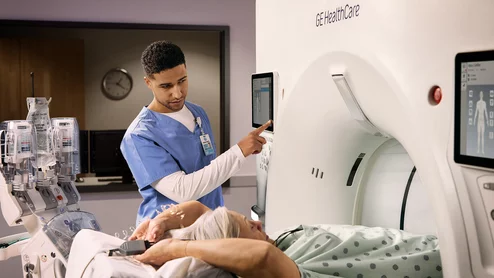
“FDA clearance comes at the perfect time, with guidelines being adopted clinically for cardiac CT and with positive reimbursement driving procedure growth," says Jean-Luc Procaccini, CEO, molecular imaging and CT.
The agency said it hopes to control “unnecessary” increases in the volume of clinic visit services furnished at certain off-campus hospital departments.

![Transcatheter pulmonary valve replacement (TPVR) with Medtronic’s self-expanding Harmony valve is both safe and effective after more than a year, according to new real-world data published in the Journal of the American College of Cardiology.[1]](/sites/default/files/styles/stack_views/public/2024-04/screen_shot_2024-04-04_at_3.49.33_pm_0.png.webp?itok=ELkY-ReX)