Radiological Society of North America (RSNA)

The Radiological Society of North America (RSNA) is a non-profit organization that represents 31 radiologic subspecialties from 145 countries around the world. We provide high-quality educational resources, including continuing education credits toward physicians’ certification maintenance, host the world’s largest radiology conference and publish five top peer-reviewed journals.

Kimberly Powell, vice president, general manager of healthcare at NVIDIA, explains how artificial intelligence (AI) has rapidly expanded in radiology and how many of the companies showing AI products at the Radiological Society of North America (RSNA) 2025 meeting use the company's technology. She said a few key technology launches by GE Healthcare show a deeper integration of NVIDIA's AI technology, and shared what the next generation of "physical AI" will enable autonomous radiology exams.

Nvidia sees major shift in radiology to AI agents and new autonomous imaging systems

“Physical AI agents being able to actually deliver some of these services—all the way into robotic surgery—this is where we're going to see this next chapter of medicine be written,” said Kimberly Powell, vice president and general manager of healthcare at Nvidia.
 

Eric Rubin, MD, vice president of clinical operations at Virtua Health, and the American College of Radiology's CPT advisor to the American Medical Association (AMA), explains the process for creating a Category I CPT code for payments and the difference with Category III temporary tracking codes.

Radiology dominates FDA-cleared AI, but reimbursement lags far behind

As of January 2026, there will only be two CPT category 1 payment codes for newer AI, despite there being hundreds of FDA-cleared medical imaging algorithms.

Richard Heller, MD, MBA, FACR, senior vice president of health policy at Radiology Partners, and involved in policy advocacy with the American College of Radiology (ACR) and the Radiological Society of North America (RSNA), explains the key policy issues impacting radiology, including the CMS efficiency cuts and unfair policies by Anthem insurance.

Radiology policy shifts threaten patient access and physician sustainability

Radiology Partners' Richard Heller, MD, MBA, outlined several mounting policy pressures providers face heading into 2026.

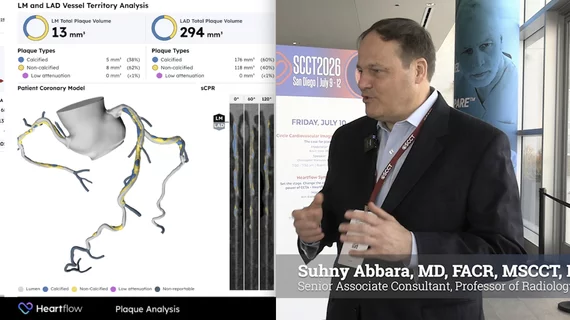
Reimbursement expected to drive implementation of CCTA, coronary plaque analysis

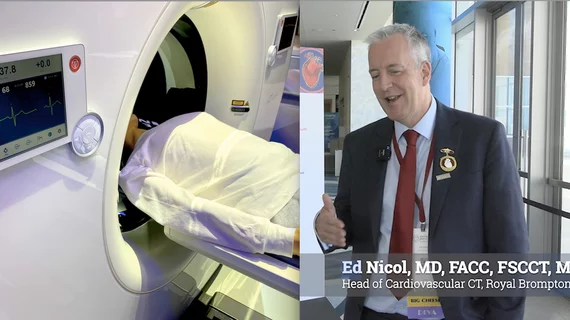
For years, imaging experts have predicted that CCTA may become the primary imaging modality for coronary artery disease and eliminate the need for invasive diagnostic catheterizations. That prediction is now coming true.

The future of MRI is helium-free

The healthcare industry accounts for close to 30% of global helium consumption, with MRI equipment needs accounting for a significant portion of that figure.

doctor telehealth computer screen

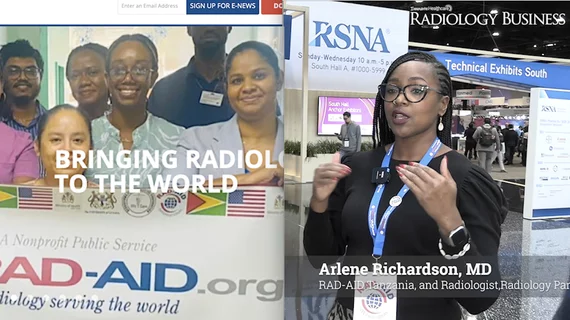
Accessibility emerged as a prominent theme during RSNA 2025

Remote scanning, mobile operations and telehealth logistics were among some of the week’s most talked about topics. 

scanner money radiology dollar MRI CT payment compensation

Funding-related barriers preventing many radiology residency programs from expanding

According to data presented at RSNA, the capacity to expand prgrams exists, but the funds do not.

Ultrasound is both the prevention and solution for cosmetic filler-related injuries

When fillers are injected without imaging guidance, there is a risk that the materials could be misplaced. A common complication of this scenario is vascular occlusion, which occurs when filler is injected in a way that disrupts bloodflow to arteries.