Cardiac Imaging

While cardiac ultrasound is the widely used imaging modality for heart assessments, computed tomography (CT), magnetic resonance imaging (MRI) and nuclear imaging are also used and are often complimentary, each offering specific details about the heart other modalities cannot. For this reason the clinical question being asked often determines the imaging test that will be used.

Mirvat Alasnag, MD, FACP, FACC, FSCAI, FSCCT, director of catheterization laboratory and research, King Fahd Armed Forces Hospital, Jeddah-Saudi Arabia, director of TCT Middle East, and member of Society of Cardiovascular CT (SCCT) Education Committee, outlines why coronary CT angiography (CCTA) imaging will likely be a paradigm shift in cardiology, and where the gaps remain to gather more clinical evidence.

CCTA continues to transform cardiac imaging, interventional cardiology

Mirvat Alasnag, MD, spoke to Cardiovascular Business about CCTA's growing influence in cardiology. 

AI healthcare doctor surgery procedure artificial intelligence

FDA clears next-generation platform for AI-enabled ECG evaluations

AccurECG 2.0 was designed to interpret a total of 13 different rhythm classifications, including atrial fibrillation, atrial flutter and ventricular tachycardia. 

The U.S. Food and Drug Administration (FDA) has granted UltraSight an expansion of its Echo Stewardship Platform compatibility with additional ultrasound system types. This enables deployment of artificial intelligence (AI) guidance for focused cardiac ultrasound (FoCUS) across an entire healthcare system without the need to buy new ultrasound systems. The move enables health systems to expand use of the AI on compatible equipment they already own, including handheld, laptop and cart-based systems.

FDA clears expanded use of AI that helps novice users perform echo exams

This update helps health systems get more value out of UltraSight's advanced AI technology—all without buying brand new ultrasound equipment.

Video interview with ASE President David Weiner explains goals of society in 2026. #ASE

ASE president outlines need to lead on AI, sustain echo workforce

ASE President David Wiener, MD, discussed his goals for 2026 in a new video interview. "The imager who doesn't use artificial intelligence will be replaced by the imager who does,” he said.

Thumbnail

Aetna covers AI-powered coronary plaque assessments, joining other major insurers

This news follows similar announcements from Humana, Cigna and UnitedHealthcare; a majority of insured Americans can now be treated with these technologies and have the procedure covered by their provider. 

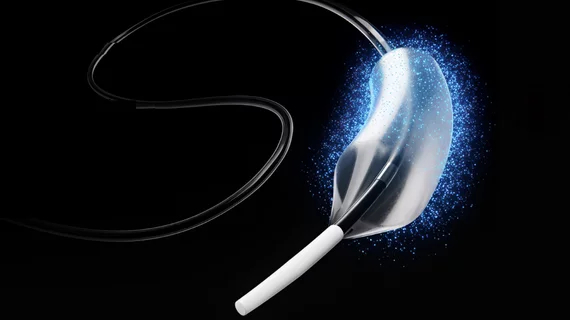
Magic Magnetic Interventional Ablation Catheter

Stereotaxis gains FDA approval for new robotically navigated cardiac ablation catheter

This new-look RF ablation catheter moves through the use of computer-controlled magnets, providing electrophysiologists with improved maneuverability and precision.  

Nick West, MD, chief medical officer, Shockwave Medical, Johnson and Johnson Meditech, explains how the company is innovating intravascular lithotripsy (IVL) therapy devices and building clinical evidence from trials for its use in a variety of calcified lesions. There are several companies developing IVL therapy, but West says Shockwave will remain the market leader because of its nearly decade long head start in the market, strong clinical evidence and has about a 10% market penetration. #IVKL

Why Shockwave Medical is so excited about the future of intravascular lithotripsy

Nick West, MD, Shockwave Medical's chief medical officer, detailed how the company is continuing to push IVL technologies forward. "We are leading the space ... we have no intention of giving up that position," he said.

the words "FDA recall" on a board

FDA confirms new recall after catheter sheath was left in patient’s body

This is a Class I recall, which means the FDA believes these devices could cause a serious injury or death.