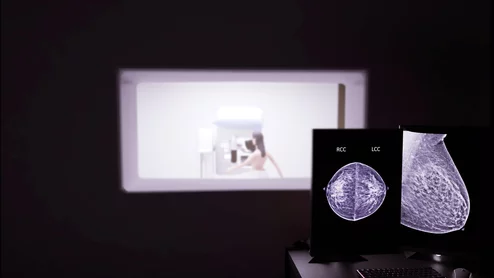
Radiologist Henry C. Lusane, MD, with Acumen Medical Imaging, interpreted the scans, reporting the mass as benign, a mistake later leading to a terminal cancer diagnosis.
The Women’s Center for Radiology, which was acquired by Solis Mammography in January, hired a cybersecurity firm to help investigate the scope of the matter.
Most medical societies urge their clinical-guidance developers to include cost data alongside care recommendations. Yet less than a quarter of published advisements—22.5%—contain evidence-based discussions on economic considerations or resource consumption.
The health network, which operates 37 hospitals in California, drastically reduced scheduling delays after integrating an FDA-cleared algorithm designed to speed up imaging acquisition times.
A report from Trilliant Health looking at payer data found that, as prescriptions for the popular weight loss drugs spike, so rises the number of approved benefits.
Fears about the risk of sudden cardiac arrest are being used to order unnecessary electrocardiogram and echocardiograms for young athletes, according to a new warning from multiple federal agencies.
While the policy of President Donald Trump is to axe research on transgender issues and DEI, scientists who spoke to the Boston Globe said their work does not run up against those restrictions.
TAVR is associated with a significantly lower risk of bioprosthetic valve dysfunction than SAVR, according to new data presented at CRT 2025 and simultaneously published in JACC.
A new spending proposal that would extend government funding for another seven months does not address the Medicare payment cut that went into effect on Jan. 1. More than 100 healthcare groups, including the ACC, STS, SCCT and SCAI, are now voicing their disappointment.
Radiologist Henry C. Lusane, MD, with Acumen Medical Imaging, interpreted the scans, reporting the mass as benign, a mistake later leading to a terminal cancer diagnosis.
The Women’s Center for Radiology, which was acquired by Solis Mammography in January, hired a cybersecurity firm to help investigate the scope of the matter.
Most medical societies urge their clinical-guidance developers to include cost data alongside care recommendations. Yet less than a quarter of published advisements—22.5%—contain evidence-based discussions on economic considerations or resource consumption.