The phenomenon is not unique to healthcare, but researchers have been exploring the prevalence and predictability of these experiences in medical settings.
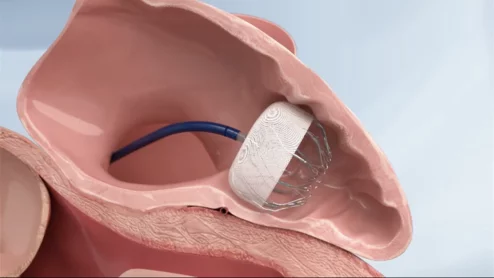
Patients were randomized to undergo treatment with the new-look AnchorMan or the Watchman 2.5. A follow-up study comparing the AnchorMan to the Watchman FLX and FLX Pro devices is already planned.
The agency said it hopes to control “unnecessary” increases in the volume of clinic visit services furnished at certain off-campus hospital departments.
Rabun County, Georgia, jurors settled on the eight-figure sum on June 26 following a trial that started 11 days prior, with Gainesville Radiology Group one of the defendants.
Details are emerging in the extraordinary case of a U.S. toddler who was found alive in a hospital morgue five or six hours after an ER doctor declared the child dead by drowning.
While the technology remains investigational in many practices, researchers say it has the potential to improve diagnostic accuracy, streamline AI development and strengthen radiology quality assurance.
Radiologist Henry C. Lusane, MD, with Acumen Medical Imaging, interpreted the scans, reporting the mass as benign, a mistake later leading to a terminal cancer diagnosis.
The Women’s Center for Radiology, which was acquired by Solis Mammography in January, hired a cybersecurity firm to help investigate the scope of the matter.
The phenomenon is not unique to healthcare, but researchers have been exploring the prevalence and predictability of these experiences in medical settings.
Patients were randomized to undergo treatment with the new-look AnchorMan or the Watchman 2.5. A follow-up study comparing the AnchorMan to the Watchman FLX and FLX Pro devices is already planned.


![Transcatheter pulmonary valve replacement (TPVR) with Medtronic’s self-expanding Harmony valve is both safe and effective after more than a year, according to new real-world data published in the Journal of the American College of Cardiology.[1]](/sites/default/files/styles/stack_views/public/2024-04/screen_shot_2024-04-04_at_3.49.33_pm_0.png.webp?itok=ELkY-ReX)