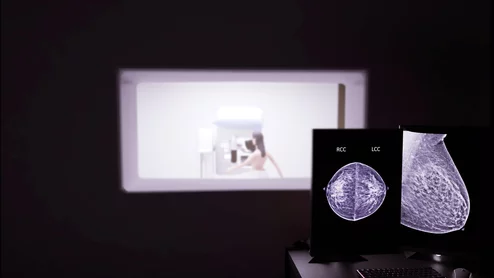
Radiologist Henry C. Lusane, MD, with Acumen Medical Imaging, interpreted the scans, reporting the mass as benign, a mistake later leading to a terminal cancer diagnosis.
The Women’s Center for Radiology, which was acquired by Solis Mammography in January, hired a cybersecurity firm to help investigate the scope of the matter.
Most medical societies urge their clinical-guidance developers to include cost data alongside care recommendations. Yet less than a quarter of published advisements—22.5%—contain evidence-based discussions on economic considerations or resource consumption.
The health network, which operates 37 hospitals in California, drastically reduced scheduling delays after integrating an FDA-cleared algorithm designed to speed up imaging acquisition times.
Fears about the risk of sudden cardiac arrest are being used to order unnecessary electrocardiogram and echocardiograms for young athletes, according to a new warning from multiple federal agencies.
The young boy was allegedly living on a diet of potato chips and other unhealthy snacks. One prosecutor described the case as "extraordinary, terrible neglect."
Almost 2,000 children underwent musculoskeletal MRI over an eight-year stretch at the Hospital for Special Surgery, and not a single one of them needed sedation to get through the exam.
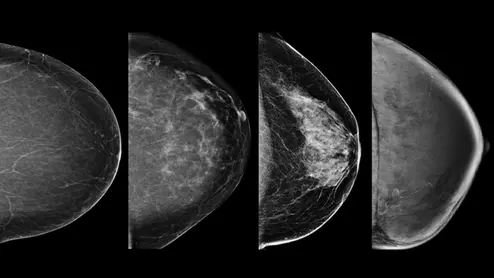
It is widely agreed that women with dense breast tissue should undergo supplemental imaging in addition to their routine mammogram screening, but the jury is still out on which modality is best for cancer detection in this group.
The resolution urges the AMA to advocate for separate payment for certain services using supplies priced above $500, as well as those containing high-cost equipment.
Radiologist Henry C. Lusane, MD, with Acumen Medical Imaging, interpreted the scans, reporting the mass as benign, a mistake later leading to a terminal cancer diagnosis.
The Women’s Center for Radiology, which was acquired by Solis Mammography in January, hired a cybersecurity firm to help investigate the scope of the matter.
Most medical societies urge their clinical-guidance developers to include cost data alongside care recommendations. Yet less than a quarter of published advisements—22.5%—contain evidence-based discussions on economic considerations or resource consumption.