Targeted interventions could help reduce pre-test anxiety, improve the physical screening experience, and address structural barriers in underserved settings.
Pitting three multipurpose LLMs against two healthcare-specific AI tools, researchers have discovered the consumer-level AI can beat its purpose-built counterparts in healthcare scenarios—and soundly, at that.
The lawsuit dates back to 2019 but has been stuck in the court process for years. In the end, the health plan will pay Pomona Valley Hospital for emergency care delivered to patients at an out-of-network rate—though the facility didn’t get all of what it was seeking.
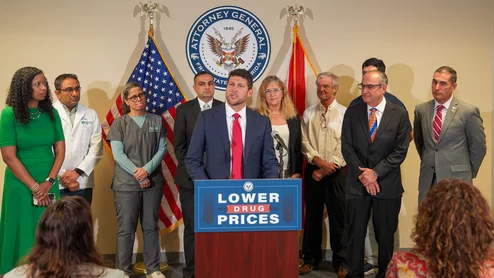
State Attorney General James Uthmeier is forcing the company to hand over thousands of documents related to its pharmacy contracts and reimbursement policies to see if the retail giant is abusing its position in the market as both a pharmacy benefit manager and a retail chain of drug stores.
Researchers believe the technique also could have utility for brain, head and neck MRI applications and could eventually be adapted to other imaging modalities as well.
The shoulders on which healthcare AI stands span from the advent of the World Wide Web, email and electronic medical records to the ubiquity of smartphones, patient portals, telehealth and personal health wearables.
However, partisan divides dwindled when respondents were asked about how federal cuts to healthcare spending would strain their local communities, particularly in rural and low-income areas.
The Pharmaceutical Care Management Association—a trade lobby representing pharmacy benefit managers—argues a state law that would force companies to divest from drugstores could leave patients without access to critical medications.
Patients treated with the Sapien 3 platform from Edwards Lifesciences and the Evolut platform from Medtronic were linked to more similarities than differences after six years. This was a single-center study, researchers noted, but it does provide an in-depth look at the safety and effectiveness of TAVR.
Targeted interventions could help reduce pre-test anxiety, improve the physical screening experience, and address structural barriers in underserved settings.