Healthcare policies have rapidly evolved in recent years, and 2025 was no exception. From payment policies to physician shortages, ASE and other medical societies had plenty to fight for throughout the year.
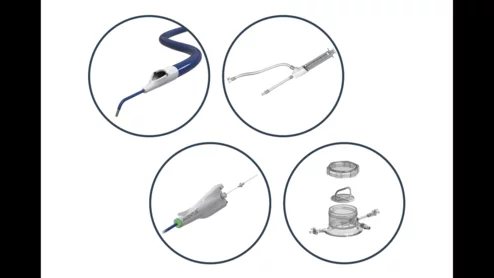
There is a risk that these catheters will fail to retain their shape during use, causing procedure delays and creating the risk of an adverse outcome. The FDA first warned users about the issue back in August.
Sean Clifford filed the lawsuit Sept. 24, 2024, in the New York State Supreme Court, contending a radiologist failed to spot signs of a forthcoming stroke.
As IR procedure volumes continue to climb, coupled with anesthesiology provider shortages, there is growing interest in achieving “deeper, more reliable sedation.”
A new analysis claims the “benchmark” qualifying payment amount insurers calculate often “dramatically” understates the actual median in-network rates they are paying for in-network care.
The request comes from a letter by Senator Chuck Grassley (R-IA), who told the company to deliver records on compliance audits and medical chart reviews.
Transfemoral TAVR is not always a viable option. In those instances, the two most effective alternatives are transcarotid access and transcaval access, according to a new SCAI expert consensus statement.
The algorithm has an edge over standard black box-style artificial intelligence applications because providers are able to see how it reaches conclusions.