Healthcare policies have rapidly evolved in recent years, and 2025 was no exception. From payment policies to physician shortages, ASE and other medical societies had plenty to fight for throughout the year.
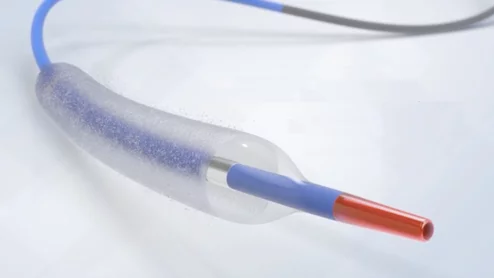
There is a risk that these catheters will fail to retain their shape during use, causing procedure delays and creating the risk of an adverse outcome. The FDA first warned users about the issue back in August.
Sean Clifford filed the lawsuit Sept. 24, 2024, in the New York State Supreme Court, contending a radiologist failed to spot signs of a forthcoming stroke.
As IR procedure volumes continue to climb, coupled with anesthesiology provider shortages, there is growing interest in achieving “deeper, more reliable sedation.”
A new analysis claims the “benchmark” qualifying payment amount insurers calculate often “dramatically” understates the actual median in-network rates they are paying for in-network care.
The recall comes after approximately 3% of patients treated with the device during the early stages of its U.S. rollout experienced a stroke or transient ischemic attack following surgery. The expected stroke rate is closer to 1%, the FDA explained.
The software has been primarily disguised as Philips’ DICOM MediaViewerLauncher.exe—a trusted program that enables patients to view their medical imaging on their own personal servers.