The phenomenon is not unique to healthcare, but researchers have been exploring the prevalence and predictability of these experiences in medical settings.
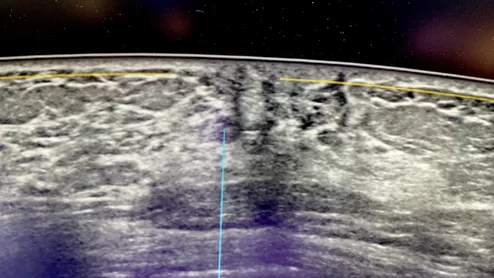
ABUS represents a viable imaging alternative that could compensate for many of the known issues with handheld ultrasound scanners, researchers suggest.
Researchers recently uncovered multiple anatomical variations in the brains of convicted killers that may help explain their lack of empathy, guilt and sensitivity to consequences.
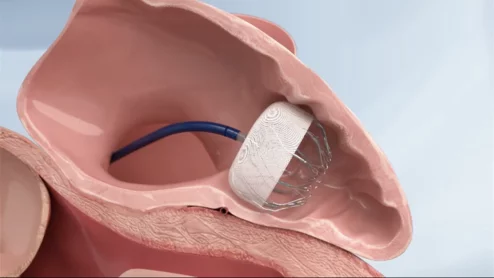
Patients were randomized to undergo treatment with the new-look AnchorMan or the Watchman 2.5. A follow-up study comparing the AnchorMan to the Watchman FLX and FLX Pro devices is already planned.
The agency said it hopes to control “unnecessary” increases in the volume of clinic visit services furnished at certain off-campus hospital departments.
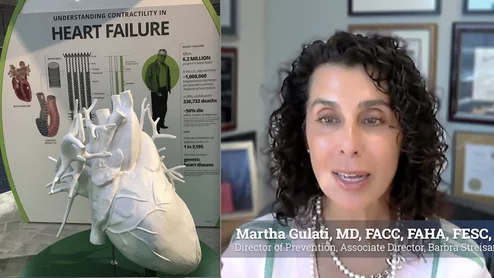
Martha Gulati, MD, co-chair on a new joint scientific statement from the Heart Failure Society of America and the American Society for Preventive Cardiology, discusses the dire need she sees to boost prevention efforts for heart failure.
Soroka University Medical Center served as the primary evacuation destination after the attack, accepting nearly 700 injured patients, most of whom needed medical imaging.
SCAI says many children and adults living with congenital heart disease are being left behind by a payment system that does not adequately value their care.
Researchers with the U.S. FDA recently assessed the impact of one such product for pulmonary embolism, with mixed results depending on the time of day.
The phenomenon is not unique to healthcare, but researchers have been exploring the prevalence and predictability of these experiences in medical settings.
ABUS represents a viable imaging alternative that could compensate for many of the known issues with handheld ultrasound scanners, researchers suggest.


![Transcatheter pulmonary valve replacement (TPVR) with Medtronic’s self-expanding Harmony valve is both safe and effective after more than a year, according to new real-world data published in the Journal of the American College of Cardiology.[1]](/sites/default/files/styles/stack_views/public/2024-04/screen_shot_2024-04-04_at_3.49.33_pm_0.png.webp?itok=ELkY-ReX)