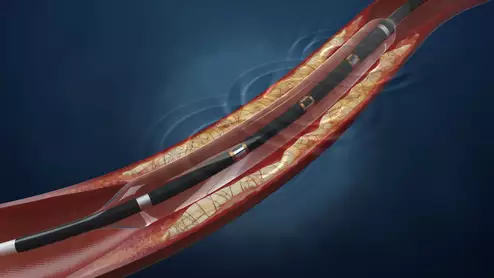
Carotid artery disease causes up to 30% of all strokes, but severely calcified lesions can make treatment quite complex. The hope is that IVL can be as successful in this area as it has been in the treatment of coronary and peripheral artery disease.
Targeted interventions could help reduce pre-test anxiety, improve the physical screening experience, and address structural barriers in underserved settings.
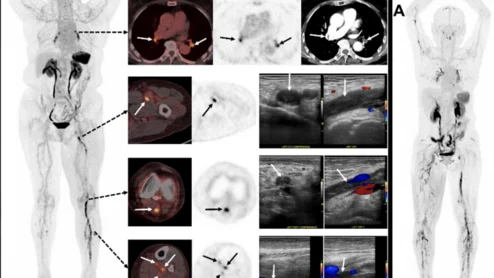
A PET exam depicting whole-body imaging of traveling blood clots has been named the Society of Nuclear Medicine and Molecular Imaging’s Henry N. Wagner Jr. Image of the Year.
AI shines as a first reader for ruling out suspicious findings in breast cancer screening exams, a new analysis in Radiology: Artificial Intelligence reveals.
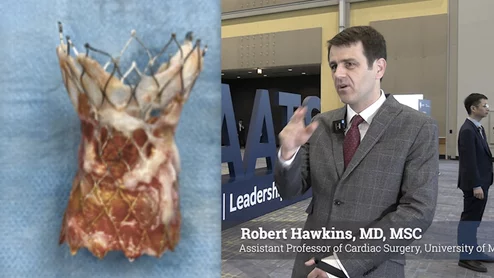
Robert Hawkins, MD, discussed an updated risk calculator—and the latest data on SAVR after TAVR—for a new video interview with Cardiovascular Business.
Carotid artery disease causes up to 30% of all strokes, but severely calcified lesions can make treatment quite complex. The hope is that IVL can be as successful in this area as it has been in the treatment of coronary and peripheral artery disease.



![Performing transcatheter aortic valve replacement (TAVR) with the J-Valve transcatheter heart valve (THV) may help limit the risk of coronary artery obstruction (CAO) in high-risk patients, according to a new study published in Clinical Interventions in Aging.[1]](/sites/default/files/styles/stack_views/public/2024-10/screenshot_2024-10-01_at_2.16.21_pm.png.webp?itok=qOxNPyOr)