Peak AI hype seems to have passed. Sobered by reality, formerly breathless futurists can now get a fair hearing when they calmly state the technology really will transform medicine.
The American College of Cardiology and American Heart Association have issued new guidelines for the management of congenital heart disease in adults. The document outlines how to manage these patients, the challenges they face and much more.
Cardiology has largely shifted to hospital-employed models, driven by reimbursement compression and evolving physician priorities. This has created challenges as well as opportunities.
Cynthia R. Moran joined the organization in 2003 after previously spending a decade as director of government relations with the American Academy of Ophthalmology
Democrats want to keep Obamacare going. Republicans want to replace it, ideally with health savings accounts. Regardless of which approach holds sway this week—or whenever—either one would be woefully shortsighted.
Physician compensation in the United States is up 6% compared to the previous year, according to a new report. It only increased by 3.9% in cardiology, however, suggesting the specialty is slightly behind the curve.
An AI-aided way has emerged to confidently select dementia patients who are likely to benefit from amyloid-PET imaging while appropriately de-selecting patients for whom the costly exam would probably be unhelpful.
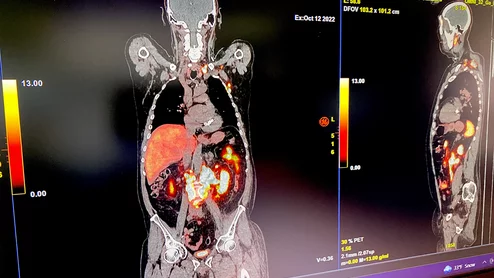
Up to 30% of patients have metastatic disease by the time they are initially diagnosed with renal cell carcinoma, making accurate staging a critical element of treatment planning.
Peak AI hype seems to have passed. Sobered by reality, formerly breathless futurists can now get a fair hearing when they calmly state the technology really will transform medicine.
The American College of Cardiology and American Heart Association have issued new guidelines for the management of congenital heart disease in adults. The document outlines how to manage these patients, the challenges they face and much more.