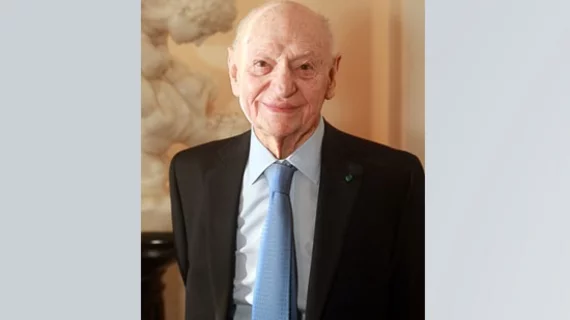
Alexander R. Margulis, MD, who served as the chair of the University of California, San Francisco (UCSF) department of radiology for 26 years, passed away on Sept. 7. He was 97 years old.
Black and Hispanic children with type 1 diabetes (T1D) are at a higher risk of increasing blood glucose levels than white children, researchers reported in JAMA Network Open.
A new training center, developed by the Australian Research Council at the University of Queensland (UQ) and the Australian government, will train more than 20 scientists to work on innovations in biomedical imaging techniques.
Shanghai researchers have created an artificial intelligence (AI) system designed to identify people most at risk for developing type 2 diabetes, according to a report by the South China Morning Post.
While half a million of the U.K. population has pacemakers or defibrillators, a survey of England’s acute hospitals found that fewer than half would scan these cardiac patients using an MRI.
Radiologists’ personal income and general knowledge of the federal advocacy process can influence their chances of donating to a radiology political action committee (PAC), according to new research published in Current Problems in Diagnostic Radiology. Could these findings help radiology PACs secure more donations moving forward?
A Fresno, California, cardiologist has been placed on five years probation following accusations that he sent inappropriate, “annoying” text messages to a teenage girl in 2017, the Fresno Bee has reported.
Millimeter wave body scanners—standard security measures at airports, train stations and public buildings since the 2000s—are completely safe for heart patients with implantable devices, German researchers reported at last month’s ESC Congress.
Health Imaging spoke with the FDA about its regulation process for machine learning-based medical imaging devices and applications, how the medical imaging industry may benefit from machine learning technologies and more.