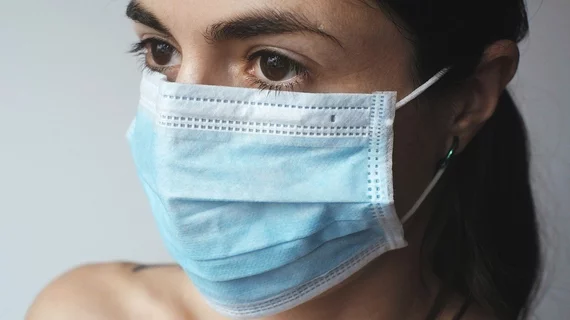
In February and March 2020, the inevitable happened: COVID-19 came to the United States, hitting the country’s healthcare system like a 10-pound sledgehammer.
Their public plea comes amid spikes in coronavirus cases in states such as Texas and Florida, with residents in both recently filing lawsuits to quash government mask mandates.
A deep learning model has achieved human-level proficiency in three of five exercises, accurately categorizing verbal expressions from more than 33,000 talk-therapy patients who underwent their sessions online.
Stanford University Department of Radiology researchers recently administered the seven-question online survey to thousands of clinicians, including 349 in the final analysis.
It’s cloud software turns preoperative medical images into a 3D “digital twin” of the patient’s heart enabling providers to plan procedures and navigate instruments during surgery.
Emory University radiologists called the variation in fatigued-resident efficiency "new and interesting information" that may inform scheduling approaches during training.