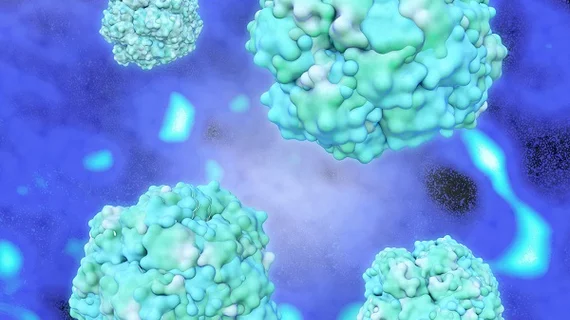
For 45% to 47% of patients who were deemed negative after conventional baseline scans, the use of the radiohybrid imaging agent resulted in at least one true positive PET finding
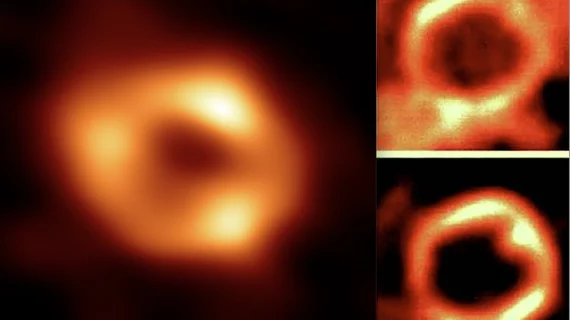
A comparison on the black hole at the center of the Milky Way galaxy (left) with PET cardiac myocardial perfusion nuclear imaging exams (right). The cardiac diagnosis of the galactic heart is motion artifact. Black hole image from the EHT Collaboration
The first image of the black hole at the heart of our Milky Way galaxy amazed the scientific community, but left cardiologists with questions about the true cardiac health of the galaxy.
The American College of Cardiology (ACC), Association of Black Cardiologists, American Heart Association and Society for Cardiovascular Angiography & Interventions are just some of the healthcare organizations supporting the FDA's proposal.
American College of Cardiology (ACC) President Edward T. A. Fry, MD, of the Ascension St. Vincent Hospital in Indianapolis, discusses the first in-person ACC meeting in three years and the impact of COVID-19 on cardiology practice.
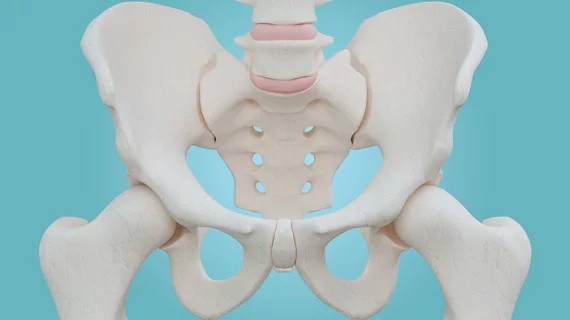
Because sacral insufficiency fractures do not always show a fracture line, they can be difficult to diagnose or even misdiagnosed as bone metastasis, which could result in additional treatments like radio-chemotherapy.
Radiology practice leaders who begrudge requests for parental and medical leave—if any such leaders are still extant in 2022—received a bracing wakeup call in late April.
Of 1,000 patients injected with corticosteroids under fluoroscopic guidance at an academic medical center over a 4½-year period, only 10 experienced serious complications within a year.